
Service design
Redesigning the world’s cosiest airport
A very serious airport with a wonderfully unserious ambition.
- Client
- Tallinn Airport
- Industry
- Travel, logistics, infrastructure, public services
- What we did
- Service design and service concepts
01
Challenge
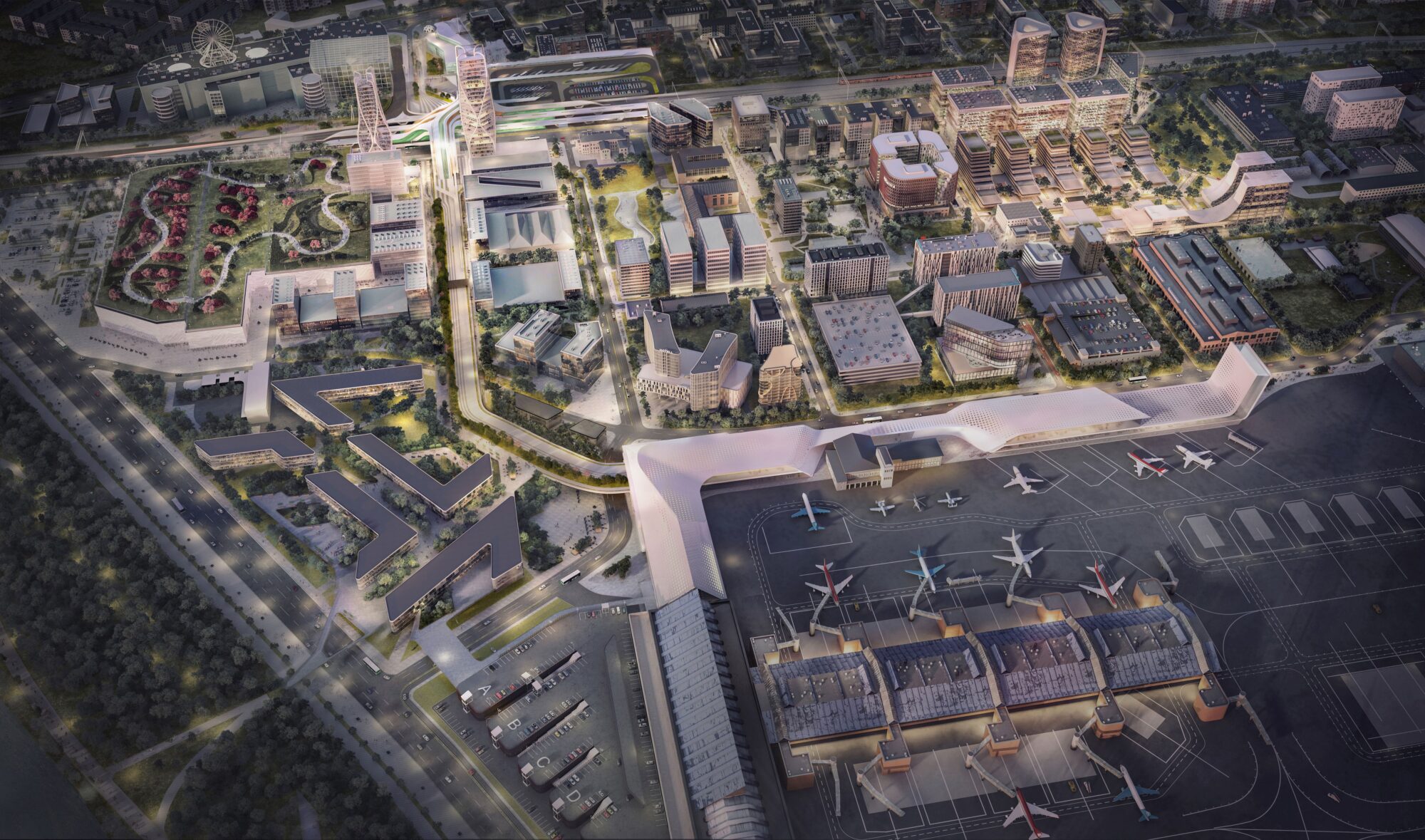
Our challenge was to define the key competitive advantages and uniqueness of Tallinn Airport as input for architects who are going to make it twice the size in the next years.
When we started, the airport was a travel hub for 3.5 million yearly passengers in a country with a population of just around 1 million. This explains why it is also considered one of the cosiest and most comfortable airports in the world—mostly due to its compact size and personal approach to handling daily travellers. How do you make sure that isn’t lost in translation when the airport grows?
02
Process
Our task was to define the most important passenger profiles, map their customer journeys and define key touchpoints that influence their experience at the airport. So the airport could continue to excel in what passengers love while fixing all the pain points with the new concept.
One of the key success factors was close collaboration with the airport’s core team. Everyone from board members to security, customer support and ground handling took part through joint workshops, passenger interviews, ideation and validation.
Research, interviews and observations helped us identify six repeating passenger behaviour patterns and extremes. Our hypothesis was that if we could make the airport experience better for these six, the rest would most likely follow.
The six passenger patterns
Not six kinds of people. Six kinds of journey.
These profiles describe behaviour in a particular travel context—not age, nationality or status. The same person can be an Early Bird today and an Optimiser next week.
01 / 06
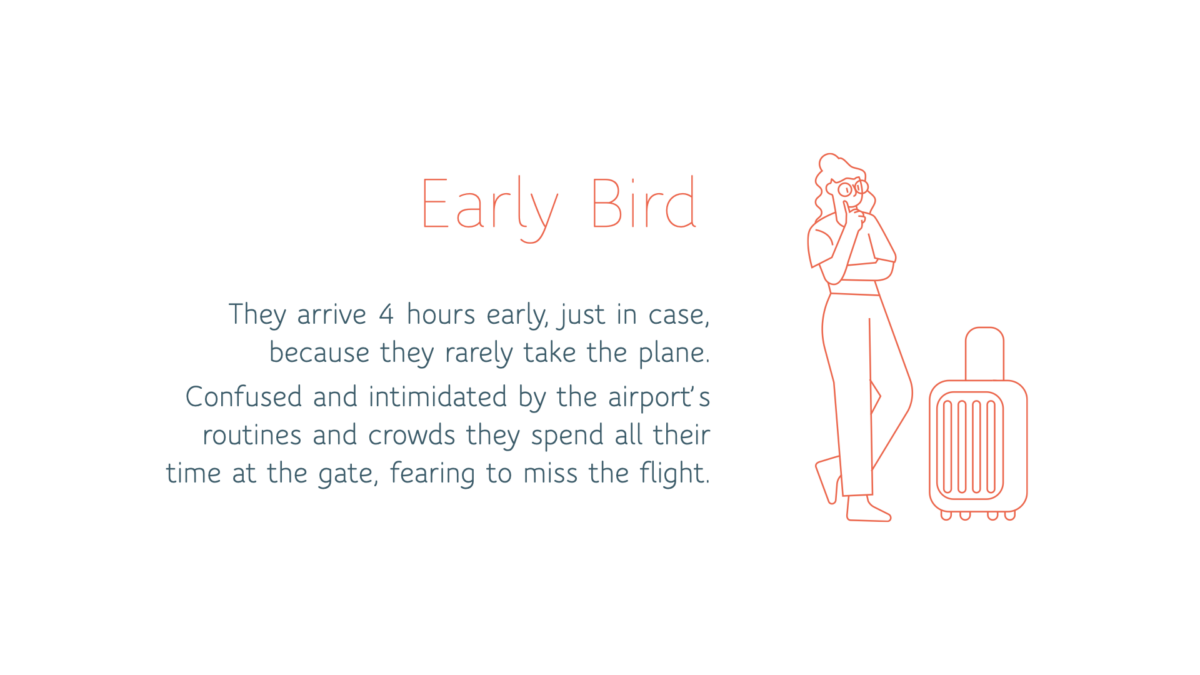
An infrequent flyer who arrives very early and needs reassurance about airport routines.
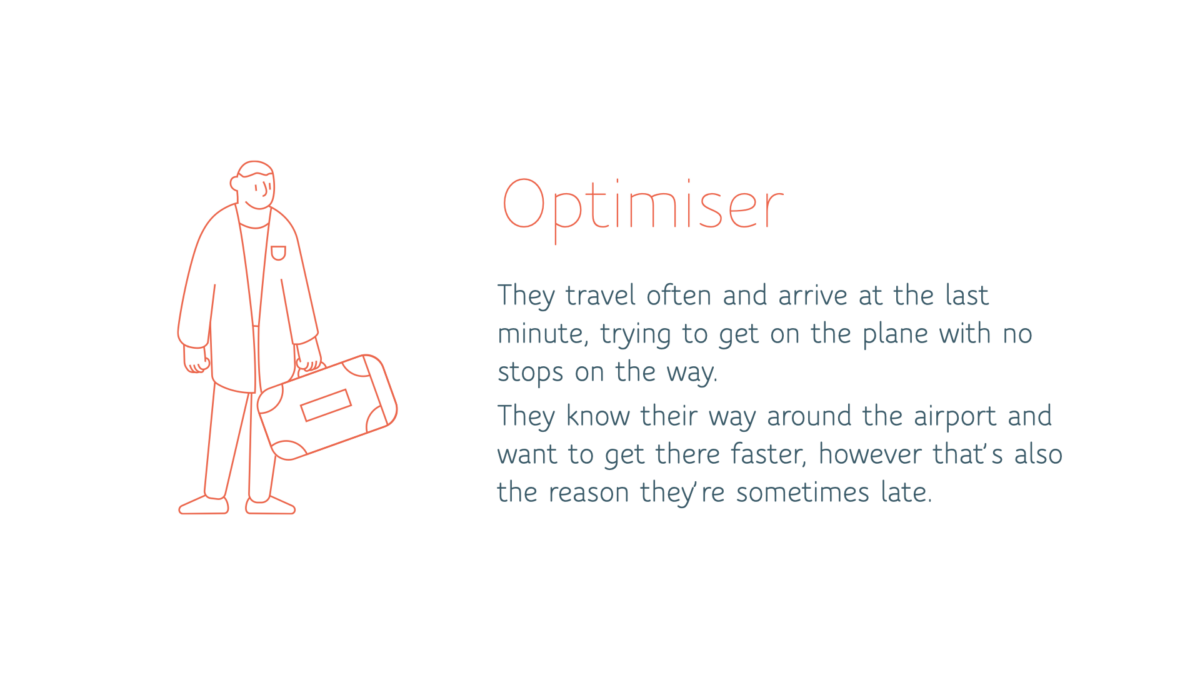
A frequent flyer who knows the airport and wants the fastest possible route to the plane.
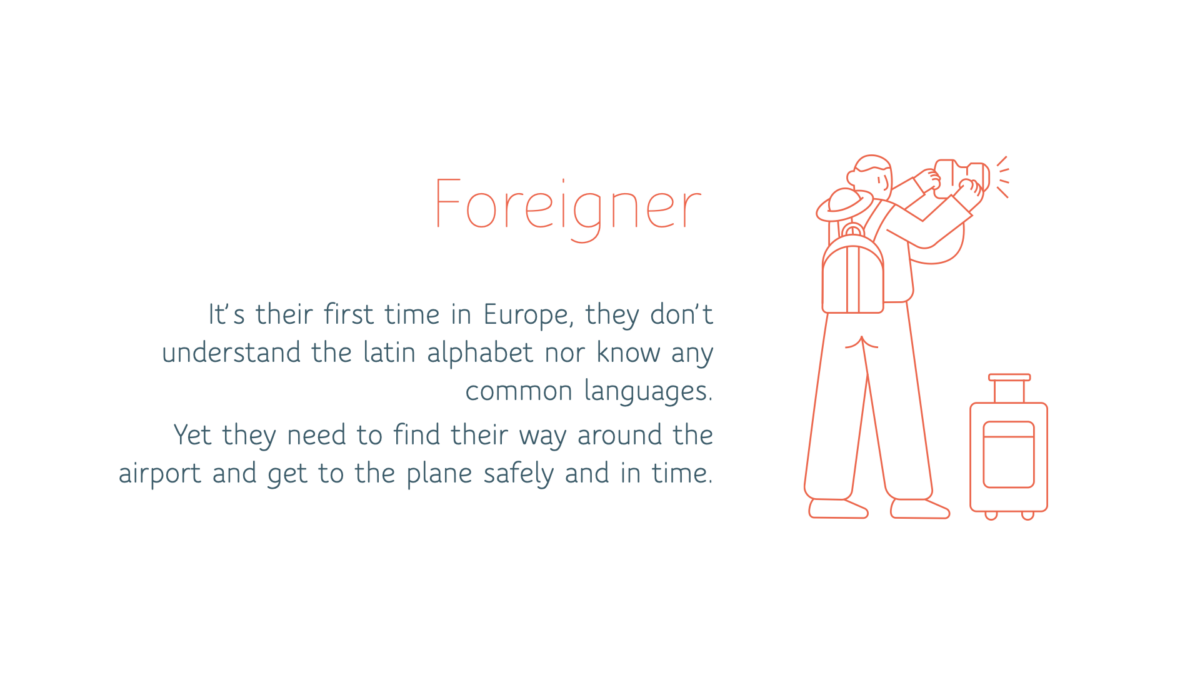
A first-time visitor who may not understand the language but still needs to navigate safely and on time.
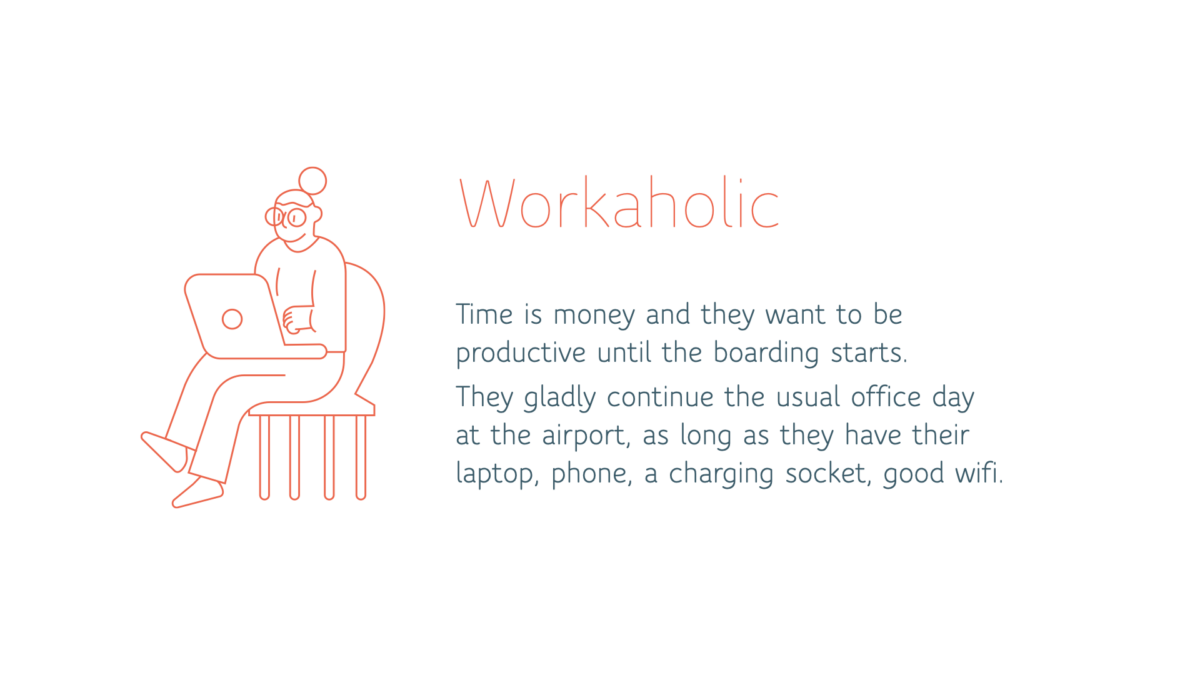
A traveller who wants to remain productive until boarding begins.
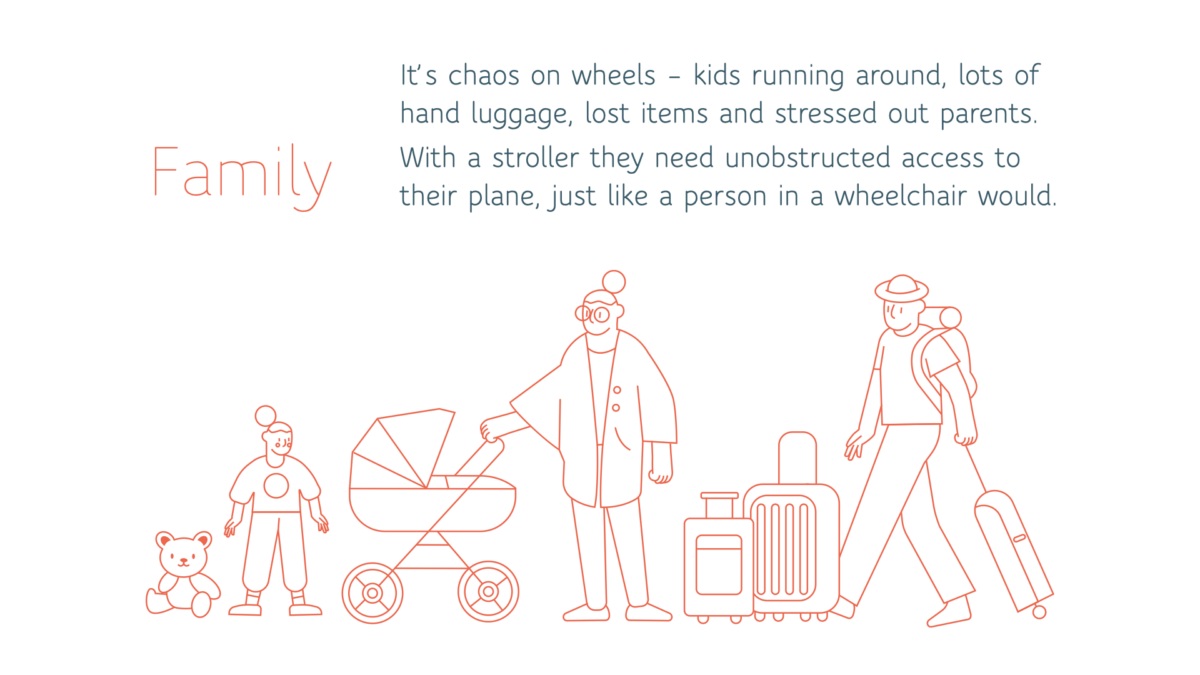
A group with children, luggage and accessibility needs that cannot be treated as an edge case.
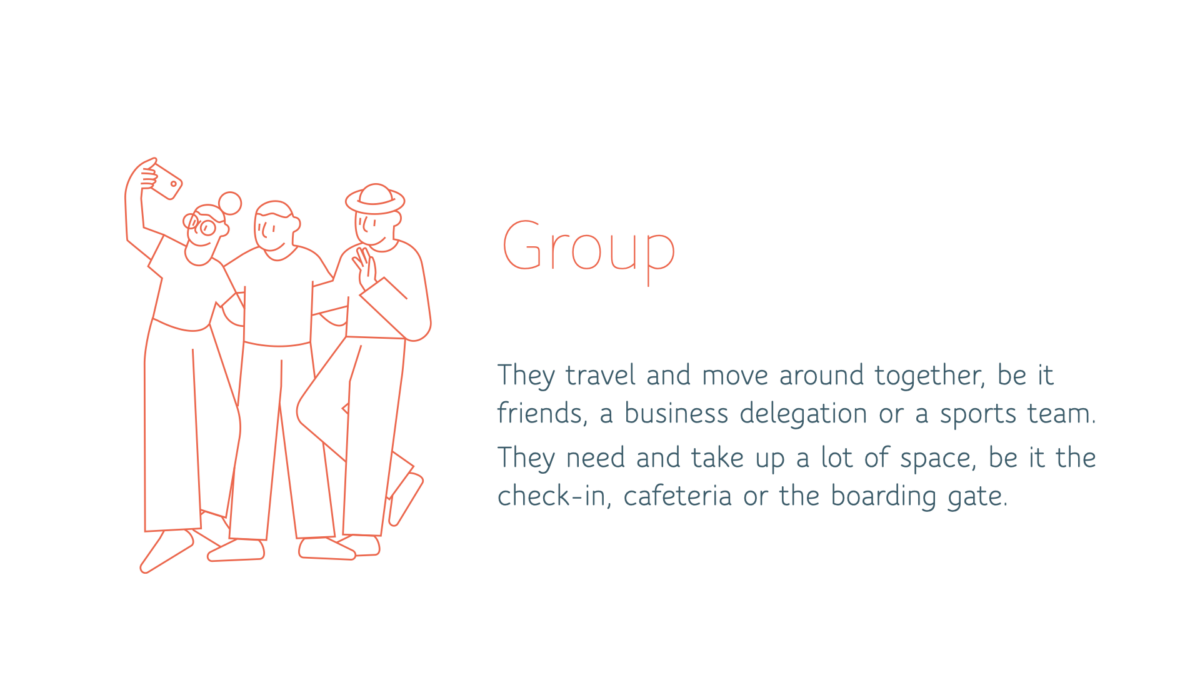
Friends, colleagues or a team who travel together and need space to move together.
03
Results
Together with the airport’s team we defined the key jobs to be done for each traveller persona, new value-for-money opportunities and validated our insights by gathering feedback from over 500 actual passengers at Tallinn Airport.
Although the pandemic delayed initial deadlines, the project outlined dozens of touchpoints that could be—and have already been—fixed. Very often it’s the smallest details that have the largest impact on customer experience: refilling your water bottle for free or knowing in advance whether boarding means a bridge or a bus across a snowy airfield.
One last question